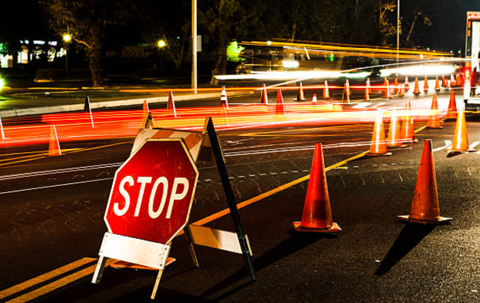
Blue lights in the mirror on your way through Fredericksburg can make anyone’s stomach drop, and that feeling is worse if you have had anything to drink. In a few seconds you go from a normal drive to worrying about your license, your job, and even jail. Many people in that moment do whatever the officer asks because they think they have no choice.
If you are stopped on Route 1 in Fredericksburg, on I-95 through Stafford County, or on a back road in Spotsylvania, the basic rules are the same, but how officers handle the stop and how courts treat these cases are very local. Understanding what is required and what is optional can keep a bad situation from getting worse. It can also give your lawyer more to work with if charges follow.
At Cornick Ndlovu, PLC, we focus our practice on criminal defense in Fredericksburg, Stafford County, and Spotsylvania County, and that includes a steady stream of DUI cases that all begin the same way, with a traffic stop. We see what officers say and do on the roadside, what ends up in the report, and how local judges respond. In this guide, we share what drivers in this area need to know about handling a DUI stop so their rights are protected and potential defenses are preserved.
Stopped for DUI in Fredericksburg? Knowing your rights and taking the right steps during a traffic stop can make a significant difference in protecting your future.
What Triggers a DUI Stop in Fredericksburg
Most DUI cases in the Fredericksburg area do not start with an officer somehow knowing you are over the limit. They usually begin with a basic traffic reason to stop the car. That might be speeding on Route 3, drifting over the center line on Courthouse Road, a broken taillight, or rolling through a stop sign in a neighborhood. Sometimes it is a checkpoint that has been set up along a busy corridor.
Legally, officers need what is called reasonable suspicion to stop a vehicle. In everyday terms, that means specific facts that would make a reasonable officer think a traffic law might be violated, not just a hunch. Swerving within your lane, taking a wide turn, or braking late at a light are common things officers in Fredericksburg, Stafford, and Spotsylvania point to in reports to justify a stop. Whether those observations hold up under scrutiny later can matter a great deal.
We review traffic camera footage, dash and body camera recordings, and driver accounts to see if the officer truly had a lawful basis to pull someone over. If the first step in the chain is weak, it may be possible to challenge the stop and ask the court to keep out evidence that came after it. Many people assume that once blue lights come on, the legal part is a done deal. In reality, how and why the stop began can be a key part of a defense strategy in local courts.
Because we regularly appear in Fredericksburg, Stafford County, and Spotsylvania County courts, we are familiar with how local officers typically describe their reasons for a stop and how judges tend to view those explanations. That local experience shapes the questions we ask clients about what happened just before the lights appeared behind them.
What You Must Do and What Is Optional During a DUI Stop
Once you are pulled over, you do have certain legal obligations, but you also have rights. Many drivers do not understand the difference and end up giving the officer far more information than they are required to. That information often shows up later in a report or on the stand, quoted back against them.
You must pull over safely, generally as soon as it is reasonable to do so. You must provide your driver’s license, registration, and proof of insurance when asked. You should keep your hands visible, stay in the car unless directed otherwise, and follow basic safety instructions. These steps help keep the situation calm and avoid giving the officer extra reasons to claim you were acting suspicious or uncooperative.
What you do not have to do is answer questions about where you are coming from, where you have been, how much you have had to drink, or anything else that could be used to build a DUI case against you. You can provide your identity and required documents and then politely say you do not wish to answer additional questions. For example, you might say that you prefer not to discuss your evening and that you would like to remain silent. Staying polite matters because attitude is often noted in a report, but polite does not mean you must volunteer details.
We have seen many cases in Fredericksburg and the surrounding counties where the strongest evidence against a driver came from their own words at the roadside. A casual attempt to sound honest, such as saying you had a couple of drinks, becomes a damaging admission once it is written into a report. Our focus on criminal defense means we are constantly working with clients to untangle the impact of statements they made without understanding how those statements would be used. Knowing your right to limit what you say during a stop can keep you from handing the prosecution unnecessary ammunition.
Field Sobriety Tests in Fredericksburg: Voluntary but High Risk
After some initial questions, officers often ask drivers to step out and perform field sobriety tests. These are physical and eye-movement exercises, such as walking heel to toe along an imaginary line, standing on one leg while counting, or following a pen or light with your eyes. Officers in Fredericksburg, Stafford, and Spotsylvania frequently use these tests to decide whether they believe someone is impaired.
Many people do not realize these roadside tests are generally voluntary. There is no Virginia law that forces you to attempt a one-leg stand on gravel in the dark or to walk a straight line next to fast traffic. Officers may phrase requests in a way that sounds like instructions, and it is natural to feel that you should comply with anything they suggest. You are allowed to decline, and you can do so respectfully. For instance, you can say you would rather not perform balancing tests.
Field sobriety tests are not simple pass-or-fail drills. They are scored by the officer based on small “clues,” such as using your arms for balance, missing heel to toe by more than a small margin, starting too soon, or pausing to regain balance. Nervousness, fatigue, footwear, age, injuries, or medical conditions can all affect how you perform. We have reviewed many videos where a driver looks steady to a layperson, yet the officer marks multiple “clues” and uses that to justify arrest.
In local courts, officers typically testify in detail about how you performed on these tests. Those descriptions often carry weight with judges, even though the tests are subjective. Our work in Fredericksburg, Stafford, and Spotsylvania includes cross-examining officers about how they gave instructions, whether they considered the surface, lighting, or the driver’s physical limitations, and whether their scoring truly matched what the video shows. Because we focus our practice on criminal defense, we are used to digging into these details and challenging shaky conclusions built on field tests.
Preliminary Breath Tests vs. Official Chemical Tests
Breath testing during a DUI stop in Virginia can be confusing because there are two different types of tests that serve different purposes. Understanding the difference is crucial because your choices and the consequences are not the same for each. Many drivers in the Fredericksburg area only learn this after they are already facing charges.
The small handheld device an officer may offer on the roadside is often referred to as a preliminary breath test. It gives a quick estimate of your blood alcohol concentration and helps the officer decide whether to arrest you. In many situations, you are allowed to decline that roadside device. The exact role of preliminary breath testing in Virginia can be technical, but it is treated differently from the official chemical test given later. You should know that refusing this handheld test does not carry the same automatic license-related penalties that refusing the official test can, although the officer may still arrest you based on other observations.
After an arrest, you are typically taken to a station or jail for an evidentiary breath test on a larger machine. This is the official chemical test that ties into Virginia’s implied consent law. In plain terms, implied consent means that by driving on Virginia roads, you have agreed to submit to this kind of test after a lawful DUI arrest. Refusing the official test can lead to additional legal consequences, such as a separate refusal-related charge or license-related penalties, even if the underlying DUI charge is eventually resolved in your favor.
Results from the official evidentiary test are usually central to the prosecution’s case, but that does not mean they are beyond challenge. Issues can arise with how the test was administered, how long the officer observed you before the test, whether the equipment was maintained correctly, and whether the arrest itself was lawful in the first place. Our trial and appellate work in Virginia DUI cases includes close review of breath test issues. Because we handle appeals as well as trial-level defense, we think from the beginning about how to preserve arguments involving implied consent and breath testing in Fredericksburg, Stafford, and Spotsylvania courts.
How Officers Decide to Arrest You for DUI
Drivers are often surprised when they are arrested even though they tried to cooperate and felt they did reasonably well on roadside tests. From the officer’s perspective, the arrest decision is based on the total picture, not a single fact. Understanding what goes into that decision can help you see where a defense may later focus.
Officers look at many pieces of information. They consider how you were driving before the stop, how you pulled over, and how you spoke and moved when they first approached your window. They note any odor of alcohol, bloodshot or glassy eyes, slurred speech, or fumbling with documents. They add in your answers to questions about drinking, your performance on field sobriety tests, and the result of any preliminary breath test.
All of this feeds into what the law calls probable cause. In practical terms, probable cause means enough reliable information for a reasonable officer to believe you are driving under the influence. It is a lower bar than proof beyond a reasonable doubt, which is what the prosecution needs to convict you in court. That gap matters, because it is possible for an officer to have probable cause to arrest, but for us to later argue that the evidence is not strong enough to justify a conviction or that key evidence should be suppressed.
We routinely analyze DUI arrest decisions in Fredericksburg, Stafford County, and Spotsylvania County from this angle. We look for inconsistencies between what the officer claimed in the report and what the video actually shows, or between the seriousness of the driving behavior and the strength of the signs of impairment. Our familiarity with how local judges evaluate probable cause helps us identify which parts of an arrest narrative are vulnerable to challenge and which are likely to carry weight in court.
What To Do After a DUI Stop or Arrest in Fredericksburg
Once the stop has ended and you are at home, released from custody, or arranging bond, it can be tempting to try to push the experience out of your mind. That is understandable, but the hours and days right after a DUI stop are an important window for protecting your rights. There are concrete steps you can take that may make a difference later.
One of the most valuable things you can do is write down everything you remember as soon as possible. Include where you were stopped, what time it happened, what the officer said when approaching your car, the questions you were asked, the tests you were asked to perform, and any comments the officer made about how you did. Note anything unusual about the road, weather, lighting, or your physical condition. Small details, such as whether instructions were repeated or whether heavy traffic made balancing difficult, can matter months later when memories have faded.
Keep any paperwork you received, such as summonses, temporary license documents, or breath test printouts, together in a safe place. These documents contain key dates and information about the charges, which court will hear your case, and what conditions may apply to your license. Bringing both your notes and these papers to a meeting with a lawyer helps us quickly piece together the timeline and identify issues that need closer investigation.
Getting legal advice early is also critical. Talking with us soon after a DUI stop allows us to give guidance on handling follow-up contact, such as calls from officers or questions from insurance. It also lets us start working on requests for video, 911 recordings, or other evidence that may not be available indefinitely. At Cornick Ndlovu, PLC, we approach each DUI case individually, drawing on our multi-attorney collaboration to review the facts and discuss strategy, so the sooner we know what happened, the more options we can explore with you.
How Your Choices During the Stop Affect Your Defense
Every DUI case in Fredericksburg, Stafford County, or Spotsylvania County has its own facts, but we see clear patterns in how drivers’ choices at the roadside shape the defense later. The point is not to second-guess yourself after the fact. The point is to understand how different paths can lead to different legal landscapes so that you make the most informed decisions you can.
Consider two drivers stopped on the same road. One answers every question about drinking, tries all the field sobriety tests despite a knee injury, and blows into every device offered. The other provides identification, declines to discuss where they have been, politely refuses balancing tests, and has questions about the roadside device. Both could still be arrested, but the second driver has limited some of the evidence an officer can gather and may have preserved more room for us to question probable cause and the strength of the case.
Your decisions about tests can also affect the charges themselves. Agreeing to the evidentiary breath test usually means the prosecution will rely heavily on that number, and we will focus attention on how the test was done, how you were observed beforehand, and how the machine was maintained. Refusing that official test can lead to a refusal-related charge or license consequences that must be addressed alongside the DUI allegation. Neither path is free of risk, and the best approach depends on the particular circumstances, which is why having a clear understanding of these tradeoffs before you are in that position is so valuable.
For some drivers, such as those with security clearances, professional licenses, or future plans that require background checks, the resolution of a DUI case can affect more than just fines or short-term license restrictions. Our work in collateral matters, including security clearance issues and firearms rights restoration, makes us very aware of those ripple effects. We factor them into how we advise clients and how we approach negotiations and courtroom strategy. The choices you make during the stop are often the first step in that chain, and understanding that helps you see why they matter.
Talking With a Fredericksburg DUI Defense Lawyer
Trying to navigate the aftermath of a DUI stop alone can feel overwhelming, especially if this is your first serious contact with the criminal justice system. A conversation with a local DUI defense lawyer gives you clarity about what you are facing, what options may exist, and what needs to happen next. It also gives you a chance to tell your story in full, not just as it appears in an officer’s report.
When you contact Cornick Ndlovu, PLC, we start by listening to your account of the stop and reviewing any paperwork you received. We pay attention to the same touchpoints discussed in this article, such as the reason for the stop, what you were asked to do, how you responded, and how the arrest unfolded. Because our practice is devoted to criminal defense in Fredericksburg, Stafford County, and Spotsylvania County, and we handle both trial and appellate matters, we are used to looking at DUI cases from multiple angles and considering how today’s decisions affect tomorrow’s options.
We know that college students, service members, and professionals in this area often have additional concerns about school discipline, clearances, or career prospects after a DUI charge. Our client-centered approach means we take time to understand those stakes and incorporate them into our strategy. If you have recently been through a DUI stop, or you are worried about how you handled one, you do not have to figure this out alone.